
-

-

-
 PT | EN
PT | EN 
Geopolitics asserts itself on Brazil from time to time. External problems are not understood as secondary at these moments; they become existential. They demand as a response a fundamental definition of space, a taking of a position in the strong sense of the term, from which the country seeks to protect itself from dangers coming from outside and open the world, or part of it, to Brazilian influence (Feldman 2025, 19)[1].
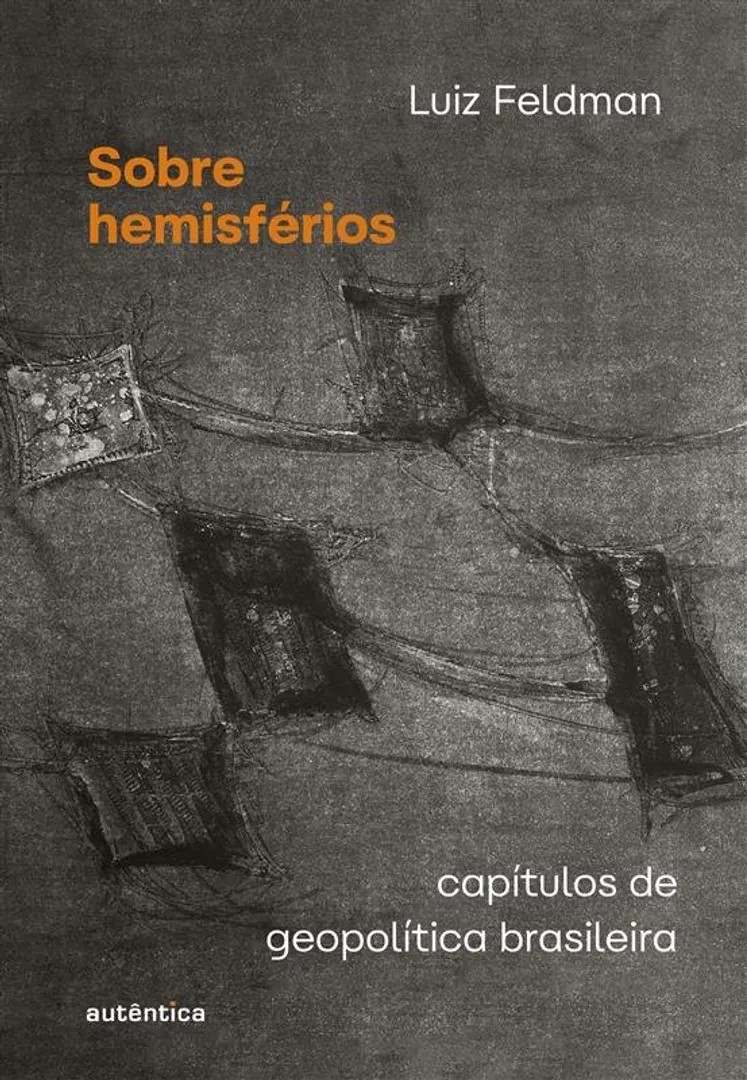
Reading this paragraph, which begins the Introduction to Luiz Feldman's book On Hemispheres: Chapters of Brazilian Geopolitics (Autêntica Editora 2025), immediately reminds us of the US military intervention in Venezuela–codenamed Operation Absolute Resolve–which occurred on January 3, 2026. More precisely, it leads us to reflect on Brazil's position regarding the event itself and what it represents for the country.
Although indisputable, the relevance of this and other analysis by Feldman in this book is not limited to what happened at the beginning of this year. The fact that the sentence above was written before the episode in question actually reinforces the enduring relevance of the issues addressed in the work when reflecting on Brazil's international insertion.
However, as Feldman himself states, "the concrete conceptions of regional order and extracontinental interest are (...) in a word, historical. They change over time, react to fluctuating circumstances and may deliberately contrast with each other. Formulated in specific contexts, they may transcend them, proving to be long-lasting or recurrent" (20). Moreover, because they are fundamental issues for the country, there will always be debates about them. And just as conceptions change historically, so too do their interpretations.
Addressing the tension between the distinct meanings of continent and extracontinentality, Feldman leads us through the history of Brazil through the facts and reflections of its thinkers. As a diplomat and, more than that, as a scholar of "Brazilian international thought"–which he describes as "a layer subsequent to political and social thought and prior to diplomatic thought" (Feldman 2023)–the author analyzes, in four distinct chapters of the book, telegrams, letters, speeches, and various texts in which Paulino José Soares de Sousa, the Viscount of Uruguay, Joaquim Nabuco, Gilberto Freyre, and Afonso Arinos discuss and prescribe what the country's international behavior should be.
This work is undoubtedly a unique contribution to scholars and those interested in Brazilian political thought, particularly regarding its international dimension. However, its relevance is also undeniable for those dedicated to understanding foreign policy choices, the whys and hows they were made. In short, for foreign policy analysts. This is certainly not an original deduction. Feldman himself refers to this aspect of his work on several occasions and does so with the clarity and elegance that are characteristic of him, stating:
Each of these conceptions of regional order and extracontinental interest presupposes its own horizon. It is characteristic of concepts, in fact, to have both a descriptive and an anticipatory dimension. This second quality makes them "diagnoses with prognostic intentions." And, as anticipations of future scenarios, the concepts establish political and social horizons that guide action towards structural change and make this change visible and accessible (2025, 37).
Although the author states that, in this way, what he does is a "diplomatic history intertwined with an intellectual history" (ibid.), I argue that what he does, or rather, what he also does, when reflecting on diplomatic practice, is an analysis of foreign policy intertwined with the study of Brazilian international thought, anchored in two very rich sub-areas of Political Science.
It is in this intersection of knowledge that Feldman shows us how Brazilian diplomacy confronted geopolitics through the notions of: South America, between 1843 and 1866, examining the writings of the Viscount of Uruguay; the Western Hemisphere, from 1899 to 1909, by examining the diaries and letters of Joaquim Nabuco; the tropics, from 1948 to 1959, with Gilberto Freyre; and of the Southern Hemisphere, between 1961 and 1963, with Afonso Arinos.
Among the numerous aspects I would like to highlight from Feldman's reflection on the Viscount of Uruguay's thoughts on the greatness of Brazil and the centrality of South America, one in particular caught my attention. By placing the Viscount at the starting point of the South American tradition of Brazilian diplomacy and attributing to the Baron of Rio Branco the position of his follower and no longer that of precursor of this orientation, Feldman simultaneously rescues the pioneering spirit of the former and grants the Baron a more temporal, I would even say more human, place, by relativizing his heavy reputation as the founder of almost all the traditions of Brazilian diplomacy.
Next, Feldman shows us the richness of visions that constitute our universe of great interpreters of the country when dealing with Joaquim Nabuco's ideas about Brazil's place in the world, which favored Monroeism as a regional order, in the name of Brazilian security and survival. Here, instead of continental protagonism, Brazil's future is conceived and projected based on an alliance with the United States, in what Silva (1995) and others have called "ideological Americanism," in contrast to the "pragmatic Americanism" of the Baron of Rio Branco.
Next, once again demonstrating that the international dimension of Brazilian political thought is plural and diverse, Feldman takes us through Gilberto Freyre's reflections. Thus, we arrive at Freyre's "imperial internationalism," a curious equation that lends Brazil's plans of opening up and projecting itself across the oceans a hint of a domination project, grounded in the thesis of the country's bi-continental character. Furthermore, among the many other interesting facets of Freyre's thought that Feldman highlights, it is worth mentioning the racial question, which invites us to deepen its examination in the history of Brazilian diplomacy and foreign policy.
Finally, in the chapter on Afonso Arinos’s and San Tiago Dantas’s thoughts, Feldman uses process tracing, a method widely favored in foreign policy analysis. Thus, through the exchange of telegrams between Arinos and the then Chancellor Santiago Dantas, and through the memoirs of other Brazilian and foreign public figures, notably from Portugal, we see how Arinos's position on the colonial question (Angola, in particular) expresses a vision of Brazil's place in the world, more in line with its peers in the geopolitical South–to use a contemporary expression. We thus see a clear anti-colonialist counterpoint to Freyre's conception of extracontinental interest, which is undeniably colonialist.
The little we have written so far and the highlights mentioned do not correspond to a fifth of the many issues and ideas that Luiz Feldman managed to unearth and bring together in a narrative as fluid as it is stimulating. In addition to the secondary sources consulted by Feldman, his research–drawing on the thinkers’ own writings, newspapers, and, especially, public and private archives in Brazil and abroad–reaffirms the importance of access to historical collections for a work of this caliber.
It is also impossible not to mention the quality of Luiz Feldman's text. In fact, the writing, which is both agile and profound, which stands out for its enormous elegance, further enriches the substantive quality of this work. And as if that were not enough, Feldman explores the writings of the four figures, bringing them into dialogue with the varied opinions, discourses, and speeches of their contemporaries–almost as though he had witnessed these debates unfold in real time, rather than excavated them from the many sources he consulted.
Finally, to explain the title of this review, I would note that on another occasion, together with Paula Vedoveli, I discussed how the dual identity exercised by the Brazilian diplomat in the national arena came to be formed: the diplomat as an intellectual (Pinheiro & Vedoveli 2012, 211-254). In doing so, among other points, we raise the issue of the unspoken, which is linked to the thesis that "agents are inevitably inscribed in social places, and their production is permeated by unspoken elements originating from (but not reducible to) the rules of organization of practices located in that place" (Pinheiro & Vedoveli 2012, 247-248). Or, in the words of de Certeau himself, "Certainly there are no considerations, however general they may be, nor readings, however far they may be extended, capable of suppressing the particularity of the place from which one speaks and the domain in which one conducts an investigation. This mark is indelible" (1982, 65). Thus, the author would also say, "It is therefore impossible to analyze historical discourse [and other knowledge] independently of the institution in function of which it silently organizes itself [...]" (1982, 71).
This, it seems to me, is also the case with this book, and it in no way weakens its contribution. On the contrary, I would go further and say it strengthens it and makes its reading even more relevant. An attempt, even if not explicit, to understand Brazil's possible choices regarding its place in the world. A reflection on the sayings of the Viscount of Uruguay, Joaquim Nabuco, Gilberto Freyre, and Afonso Arinos, but also an invitation to think about the unspoken words of the four characters and the author himself.
Note
[1]All quotes were translated by the editors from their original version.
References
de Certeau, Michel. 1982. A escrita da história. Rio de Janeiro: Editora Forense Universitária.
Feldman, Luiz. 2023. Mar e sertão: ensaio sobre o espaço no pensamento brasileiro. Rio de Janeiro: Topbooks Editora.
Pinheiro, Leticia & Paula Vedoveli. 2012. “Caminhos cruzados: diplomatas e acadêmicos na construção do campo de estudos de política externa brasileira”. Política hoje 21 (1): 211-254. https://periodicos.ufpe.br/revistas/politicahoje/article/view/3793.
Silva, Alexandra de Mello e. 1995. “O Brasil no continente e no mundo: atores e imagens na política externa brasileira contemporânea”. Estudos Históricos 8 (15): 95-118. https://www.academia.edu/65104491/O_Brasil_no_continente_e_no_mundo_atores_e_imagens_na_pol%C3%ADtica_externa_brasileira_contempor%C3%A2nea.
Submitted: January 21, 2026
Accepted for publication: January 22, 2026
* Translated by Victoria Corrêa do Lago with the support of digital machine translation tools: Google Translate (initial draft), Grammarly (grammatical and syntactic revision), and ChatGPT (selective phrasing refinements). Reviewed by the author.
Copyright © 2026 CEBRI-Revista. Este é um artigo em acesso aberto distribuído nos termos da Licença de Atribuição Creative Commons, que permite o uso irrestrito, a distribuição e reprodução em qualquer meio, desde que o artigo original seja devidamente citado.